
The Shame of Muradnagar: A Rapist is a Rapist, No Other Identity
Kabir Ahmed Chowdhury | ৩০ জুন, ২০২৫
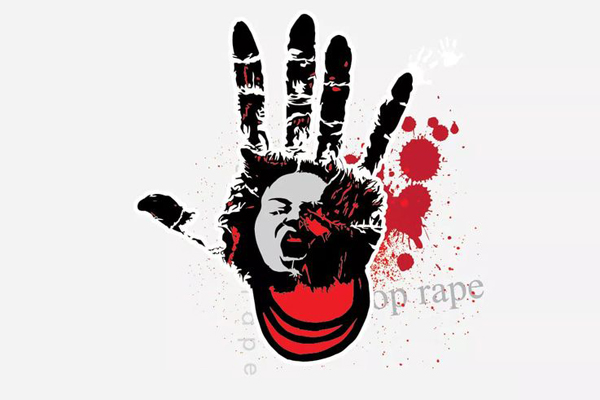
The rape incident in Muradnagar, Cumilla, occurred last Thursday. On Saturday night, a video went viral on Facebook, and only then did the incident come to public attention. Before that, on Friday afternoon, the victim filed a case at the police station, but it didn’t gain traction in social or mainstream media. Though unwanted, the viral spread of the video brought the issue into the spotlight. People expressed widespread outrage, prompting law enforcement to act swiftly, leading to the arrest of the rapist and his accomplices who shared the video.
The condition of the victim, as seen in the viral video on social media, is indescribable. Helplessness and a desperate plea for survival were evident. Yet, neither the rapist nor his accomplices spared her. The video also showed the woman being physically assaulted. The assailants were locals. The victim is a victim in every sense—both of the rape and of society’s tendency to label her a criminal. The locals who beat her acted on preconceived notions.
Here’s a question: If the video hadn’t gone viral on social media, would the rapist and his accomplices have been arrested? If it hadn’t spread, would Asif Mahmud, a student representative turned interim government advisor, have posted about it on Facebook? Notably, he dragged politics into the issue, subtly pointing fingers at his political opponents. Asif Mahmud wrote: “Those who have been sheltering, rehabilitating, and empowering Awami terrorists in Muradnagar, enabling oppression, torture, extortion, and rape against ordinary people—they are responsible for today’s situation. Previously, a mafia gang attacked and vandalized a police station to free an extortionist caught red-handed. Today, I am ashamed, at a loss for words. Locals keep saying that while the country was liberated through a mass uprising, Muradnagar has fallen into the hands of even bigger mafias. The local administration is trying to arrest the rapists, but unless the main mafias are reined in, the situation will worsen.” Speechless! Is it responsible to bring political rivalries into a heinous incident like rape? I, for one, am skeptical!
According to data from Ain o Salish Kendra (ASK) for January–May 2025, there were 383 reported rape cases during this period, including 97 gang rapes. Of these, 16 victims were murdered after being raped, 5 committed suicide due to rape, 3 were killed during rape attempts, and there were 150 attempted rape cases. These figures are drawn from some online media, specific mainstream media, and ASK’s data. Thus, the actual number is likely much higher than reported. ASK noted that at least 71 of the over 400 rape cases have no record of pursuing legal remedies.
Undoubtedly, this is not the full picture of women’s oppression across the country—it’s just a fraction of the reported data. Beyond this lies unreported incidents, those hidden from relevant organizations, and other forms of familial and societal oppression against women. The data from just five months indicates that more than two women are raped daily. This is horrific. Even more alarming is that unless an incident goes viral, it often escapes the administration’s attention. While sharing such videos is illegal and punishable, it’s a grim reality.
The rape victim in Muradnagar belongs to a “religious minority.” The “minority card” is well-established here. Some see it as the victim’s vulnerability, while others use it as an opportunity. After the interim government took office, there was an attempt to create a narrative that religious minorities weren’t attacked due to their religious identity but rather their “political identity.” Top government figures at the time propagated this. Has this narrative now backfired?
The rapist, Fazr Ali, is being identified by his political affiliations. Some claim he’s linked to BNP, others to Awami League. Asif Mahmud’s veiled remarks in his Facebook post have fueled this further. In a context where political identity puts lives at risk, isn’t engaging in rape an even greater risk?
The psychology behind rape hinges on the notion that women are weak. It stems from an individual’s decision not to see women as human beings. This can also be seen as a reflection of intellectual poverty and incompetence. To many, women are mere objects of consumption—a belief reinforced by widespread propaganda in the country, often cloaked in religious garb. Many are influenced by this. This influence is particularly evident in Muradnagar, where Fazr Ali broke into a house, raped a woman he found alone, and his accomplices recorded and shared the video online. This act reflects not only his perverse sexual desires but also a craving to display power. The neighbors who beat the victim are similarly shaped by misguided notions about women.
Fazr Ali was arrested in Dhaka. Public outrage on social media likely spurred law enforcement to act quickly. Social media brought a hidden incident to light. Amid many negatives, this awareness is a positive. However, the matter shouldn’t end with an arrest. Simultaneously, other cases of women’s oppression have surfaced on social media. Many incidents lack videos and thus don’t gain attention. But a crime is a crime, and those responsible must pursue legal remedies.
Noticeably, when one incident gains traction on social or mainstream media, similar cases surface one after another. Some label these as “motivated,” but they’re not. These are the visible manifestations of the daily injustices against women and children nationwide. We don’t usually discuss these issues, so they go unnoticed. When one case stirs us, others come into view, even if they don’t receive equal attention.
Rape must be seen as a crime. Regardless of the rapist’s various identities, they are, above all, a rapist, and legal action must reflect this. Claims of “mafia gangs” sheltering or rehabilitating them only dilute the crime’s severity. Society must stand against rapists as rapists, and the administration must act responsibly.
Kabir Ahmed Chowdhury: Journalist, Columnist
✉ sylhettoday24@gmail.com ☎ ৮৮ ০১৭ ১৪৩৪ ৯৩৯৩
৭/ডি-১ (৭ম তলা), ব্লু ওয়াটার শপিং সিটি,
জিন্দাবাজার, সিলেট - ৩১০০, বাংলাদেশ।
Developed By - IT Lab Solutions Ltd.