
Thousands of Tea Workers’ Children in Sylhet Deprived of Education’s Light
Sylhettoday Desk | ০৭ জুলাই, ২০২৫
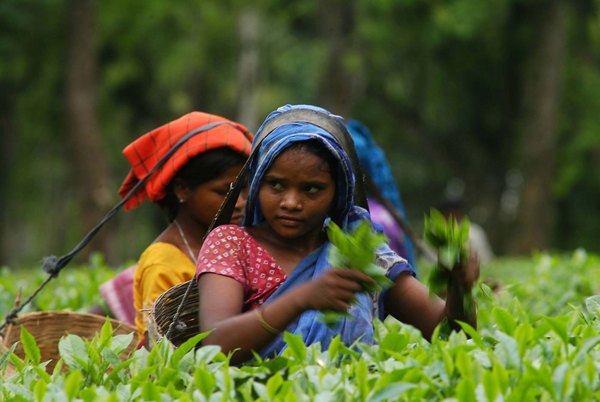
Most of Bangladesh’s tea gardens are located in the Sylhet region, employing over 150,000 workers who sustain their families on minimal wages. These workers face numerous challenges, including delayed salary payments and other issues. Despite their dedication to work, tea garden workers are deprived of various social and state benefits, and their children, in particular, are largely excluded from education. The absence of government schools in most tea gardens in Sylhet has left countless children unable to pursue their dreams due to a lack of educational opportunities.
In areas such as Burjan, Kalagul, Chharagang, and Khadim, there are no government primary schools. Each tea garden is home to hundreds of children, but the absence of government schools creates significant barriers to their education. While some gardens have one or two primary schools, these are often privately managed by garden authorities, lacking government approval or MPO (Monthly Pay Order) support in many cases.
According to the 2022 Multiple Indicator Cluster Survey (MICS), 29.8% of tea worker children in Habiganj’s tea gardens are engaged in child labor, 15.6% in Moulvibazar, and 19.3% in Sylhet. Food insecurity, lack of proper housing, and the inability to ensure a better quality of life force many tea worker children to abandon education and join the workforce in tea gardens. At an age when children should be happily heading to school with backpacks, they are instead waking up at dawn to carry baskets and work in the gardens to support their families’ livelihoods.
Under Bangladesh’s labor laws, tea garden authorities are required to establish a school if there are at least 25 students. However, out of 167 tea gardens in the country, only 9 (or 12–14 according to some sources) have primary schools, and just 3 have secondary schools, with no colleges available.
While the government has made primary education mandatory nationwide, surveys indicate that approximately 50,000 children in tea worker communities are deprived of primary education. Nationally, 98% of children access primary education, but for tea worker children, this rate is only 49%. The few schools that exist in tea gardens lack sufficient teachers, and most are run by a single teacher without following a proper curriculum. There is no government or garden authority oversight of these schools’ educational activities. Although students receive free government textbooks, they are not provided with stipends, uniforms, notebooks, or mid-day meals, increasing health risks for these children.
Education Budget: A Mere Tk 1.50 Per Day
The Tea Garden Owners’ Association allocates a monthly quota of only Tk 45 per child for education, equivalent to Tk 1.50 per day. This meager amount makes it nearly impossible for parents to afford pens, books, or notebooks, let alone sustain their children’s education.
According to the Bangladesh Tea Workers’ Union, the primary education enrollment rate for tea worker children ranges from 35–59% depending on the garden. About 40% of these children continue to secondary education, and only 21% reach higher secondary levels. Notably, female student enrollment is 15–18% lower than that of male students.
Discrimination in State Education Institutions
Tea garden communities, comprising around 98 ethnic groups with diverse languages and cultures, face systemic discrimination. Government notifications recognize only a few ethnic groups, such as Santal, Munda, Rajbongshi, and Deshwara, excluding many others. As a result, tea worker children are unable to access adequate education from garden-run schools and face limited opportunities in government schools or higher education institutions. This leads to high dropout rates, with a survey last year revealing that 49% of tea worker children abandon education during primary school.
Additionally, tea worker children are often isolated from educated communities in surrounding areas and face class-based discrimination in government schools. Most parents, being illiterate, are unable to support their children’s education, leaving them dependent on schools. However, inadequate education and discrimination in schools force many children to drop out early, pushing them into the tea industry at a young age.
Lack of Government Oversight
Despite the government’s mandatory primary education policy, only 12–14 out of 167 tea gardens have primary schools, and the rest have none. Over the past decade, there has been no government oversight to address this issue.
Jenny Paul, a teacher at an NGO-run school in Sylhet’s Lakkatura tea garden, said, “The children are eager to learn, but their parents cannot afford the costs. Most children drop out after Class 5.” She added, “There are no opportunities to continue education after primary school in the gardens. Parents lack the financial means to send their children to external schools, so education unofficially ends after Class 5 for most tea worker children.”
Sylhet’s Situation
Across Sylhet’s eight upazilas, over 130 tea gardens lack government primary or secondary schools. Some gardens have small primary schools managed by garden authorities or the Tea Board, but these have weak infrastructure, insufficient teachers, and no direct government supervision.
Upazila-Wise Overview
- Sylhet Sadar: Malnicherra and Lakkatura tea gardens have one or two government primary schools, but most gardens lack any schools.
- Jaintapur and Gowainghat: With around 30 tea gardens, these areas have no government-run schools.
- Fenchuganj and Balaganj: Some tea gardens have small primary schools supported by NGOs or the Tea Board, but most are privately operated.
- Companiganj, Kanaighat, Zakiganj, and Beanibazar: These upazilas mirror the same situation, with no government schools, forcing children to rely on distant schools for education.
Sabitri Tanti, a tea garden worker from Akakhazra, shared, “My daughter walks three kilometers daily to attend school. On rainy days, the muddy, slippery roads make it impossible to go. She ends up staying home, and studying becomes a struggle. Eventually, she had to drop out after Class 5. Her dreams stopped there.”
Surma Tanti, a tea workers’ leader, expressed her frustration: “We work all day in the sun and on slippery ground, returning home exhausted. But it hurts more to see our children unable to attend school.”
Educationist and former principal of Madan Mohan College, Lt. Col. (Retd.) M Ataur Rahman Pir, said, “Sylhet has nearly a hundred tea gardens, where thousands of working families contribute significantly to the nation’s economy through their hard labor across generations. Sadly, these gardens lack government primary schools, let alone secondary ones. As a result, educational opportunities for girls are almost nonexistent. Thousands of families’ daughters grow up uneducated, deprived of even primary education.”
Sylhet District Education Officer Md. Nurul Islam said, “To my knowledge, there are a few primary schools in tea gardens, but they are located some distance away. All primary schools in Sylhet receive government allocations, which are used for various purposes.”
Kabir Chowdhury, a teacher at a government school, remarked, “If there were at least one government school in the tea garden areas, it would foster greater responsibility among parents, who would better understand the importance of education. But the reality is that many here still don’t know why schooling is necessary or how vital education is for their children’s future. As teachers, we try to raise awareness, but without a structured education system, creating that awareness becomes nearly impossible. To instill the belief that education can transform lives, we first need to ensure access to education.”
✉ sylhettoday24@gmail.com ☎ ৮৮ ০১৭ ১৪৩৪ ৯৩৯৩
৭/ডি-১ (৭ম তলা), ব্লু ওয়াটার শপিং সিটি,
জিন্দাবাজার, সিলেট - ৩১০০, বাংলাদেশ।
Developed By - IT Lab Solutions Ltd.