
The Illustrious Life of Khaleda Zia: From Housewife to Three-Time Prime Minister
Shuhel Ahmed Chowdhury | ৩০ ডিসেম্বর, ২০২৫
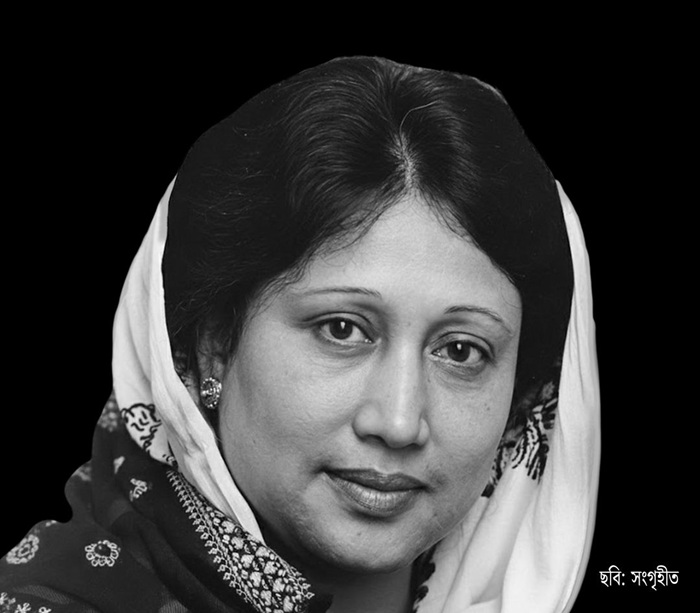
BNP Chairperson Begum Khaleda Zia is no more. She breathed her last on Tuesday (December 30) at 6:00 AM.
Born on August 15, 1945, in Dinajpur to Iskandar Majumder and Taiyaba Majumder, her family originally hailed from Feni. Her father moved to the then West Pakistan from Jalpaiguri, India, following the partition. She studied at Dinajpur Government Girls' High School and later at Surendranath College. In 1960, she married Ziaur Rahman.
Though she began her journey as a simple housewife, her relentless struggle and uncompromising political persona eventually led her to become the Prime Minister of the country three times.
Entering Politics Amidst Crisis
Following the assassination of President Ziaur Rahman by disgruntled army officers on May 31, 1981, Khaleda Zia remained at her Dhaka Cantonment residence with her two young sons, Tarique Rahman and Arafat Rahman. At that time, the BNP was in disarray, facing internal feuds and a leadership crisis.
In his book, Ongoing History: Some Moments, Some Words, late BNP leader Moudud Ahmed noted that the military and the ruling circle feared Khaleda Zia the most. She was perceived as the strongest potential candidate for the presidency. However, the then Army Chief General H.M. Ershad preferred Vice-President Justice Abdus Sattar, who was elderly and seen as more manageable.
The Transition from Domestic Life
Journalist Shafik Rehman once described her as a "shy housewife" busy with her domestic life and two sons even while Ziaur Rahman was in power. However, due to Justice Sattar’s failing health and internal party dissatisfaction, a faction of the BNP began pushing to bring Khaleda Zia into active politics.
Initially, she showed little interest. According to political analysts, the trauma of her husband’s assassination and the uncertainty of a political career weighed heavily on her. Journalist Mahfuz Ullah noted that key figures like Colonel (Retd.) Akbar Hossain, Nurul Islam Shishu, and AQM Badruddoza Chowdhury played vital roles in convincing her to join politics.
Rising to Leadership
According to the BNP website, Khaleda Zia emerged as a political worker on January 3, 1982, when she took primary membership of the party. On November 7 of the same year, she delivered her first public speech while paying respects at Ziaur Rahman’s grave.
In March 1983, she became the Senior Vice-Chairman of the party. Following the military coup by H.M. Ershad on March 24, 1982, Justice Sattar was ousted and gradually faded from the political scene. This paved the way for Khaleda Zia's influence to grow. Despite opposition from military intelligence and certain cabinet groups, she was elected Chairperson of the BNP on May 10, 1984.
The Anti-Ershad Movement and Premiership
Khaleda Zia gained nationwide fame during the 1980s for her fierce movement against General Ershad’s military rule. Left-leaning leaders like Hayder Akbar Khan Rono and Rashed Khan Menon also encouraged her to lead the charge against Ershad. Rono recalled her as a woman of few words but a keen listener with a deep-seated resolve against the military autocrat.
Her uncompromising stance earned her the title of "Uncompromising Leader." Following the fall of Ershad, the BNP won the national election in 1991. Within just ten years of entering politics, the former housewife became the first female Prime Minister of Bangladesh.
Khaleda Zia holds the unique record of never losing a seat in any parliamentary election she contested. Her two primary tenures (1991–1996 and 2001–2006) remain significant periods in the political history of Bangladesh.
✉ sylhettoday24@gmail.com ☎ ৮৮ ০১৭ ১৪৩৪ ৯৩৯৩
৭/ডি-১ (৭ম তলা), ব্লু ওয়াটার শপিং সিটি,
জিন্দাবাজার, সিলেট - ৩১০০, বাংলাদেশ।
Developed By - IT Lab Solutions Ltd.