

04 September, 2026 03:12
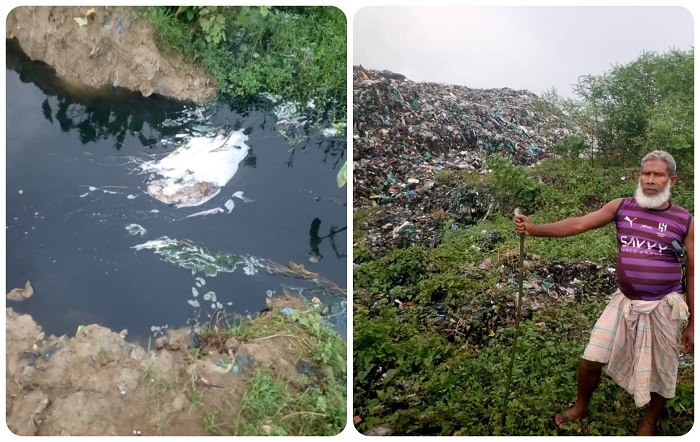
Surrounded by waste and overgrown grass, it is hard to believe this was once a vast wetland. A thin trickle of water runs through it like a narrow canal — but the water is pitch black. There are no fish, no aquatic life of any kind.
This is the state of Bharera Beel in Dakshin Surma, Sylhet. Right beside this wetland, at Paraichak, lies the dumping ground of Sylhet City Corporation (SCC). For years, waste from this site has been spilling into the adjacent haors and beels, gradually filling them up and poisoning the environment.
This beel and the surrounding haors were once a primary source of rice, fish, and water for the people of at least ten neighbouring villages. Today, neither paddy nor fish can be found here, and the water is unfit for any use.
The City Corporation, however, maintains that retaining walls have now been erected around the dumping station, preventing waste from spreading beyond its boundaries. It also says the country's first 'bio-drying plant' is being established in the city as part of modern waste management — a facility that, once operational, will bring about a fundamental transformation in waste management and enable fuel production from waste.
Local residents, however, say that even with the retaining walls in place, hundreds of tonnes of previously deposited waste remain heaped up inside the beel and haors.
Years of Struggle, No Results
Shamim Kabir, a social activist from Gangaramer Chak village adjacent to the beel, has been campaigning for the protection of Bharera Beel for many years.
He said that due to SCC's waste, Bharera Beel and five or six surrounding haors have been virtually wiped out. Of the nearly 20-acre beel, 15 acres have already been filled in. What little water remains is jet black. No fish can survive in it, no paddy can be grown. Had SCC kept its waste within the confines of the dumping ground, none of this damage would have occurred.
"We have knocked on the doors of ministers, the mayor, the Department of Environment, and numerous other authorities to protect the beel, haors, and the environment," he said. "But nothing has come of it."

Fishing Communities Left Without a Livelihood
At least five fishing villages surround this beel. Ninety percent of the residents of these villages once depended on fishing for their livelihoods. Now they are being forced to change their profession entirely.
Residents of one such village, Chhita Gotatikr, said that just ten years ago, the beel produced several tonnes of fish each year and paddy was cultivated on nearly 2,000 acres of land. Now there is neither fish nor paddy — not even water. Even during the monsoon season, one can walk across the entire beel on foot.
"The haors are nothing but mounds of waste," they said. "If any farmer steps into the haor, the broken glass cuts their feet. The entire beel and haor are choked with plastic."
Sabuj Kumar Biswas, a former member of the local Kuchai Union Parishad, recalled that until a few years ago the beel was alive with the calls of herons, crows, cormorants, kites, and countless other birds. Every year, the traditional 'polo bawa' fishing festival was held here. Farmers used the beel's water to grow paddy, and fishermen cast their nets freely. Today, the beel has ceased to exist. It has reached a point, he said, where the current generation will not even recognise Bharera Beel.
He called for the beel to be excavated, its banks reinforced, palm trees planted along its edges, and a modern, environmentally friendly ecosystem restored.
Ten Villages Affected
Local sources say that people from at least ten areas — Alampur, Manipur, Chhita Gotatikr, Gangaramer Chak, Gotatikr, Habinandi, Ganganagar, Palpur, Kuchai, and Srirampur — have been affected by the filling of the beel.
According to SCC sources, Sylhet — a city of nearly one million people — generates an average of 500 tonnes of waste per day. Of this, 250 to 300 tonnes are collected and taken to the Paraichak dumping ground in Dakshin Surma. With the aim of converting this waste into a resource, SCC and LafargeHolcim Bangladesh jointly established the country's first Material Recovery Facility (MRF) plant at a cost of approximately 16 crore taka.
Inaugurated in February 2024, the plant currently separates 150 to 300 tonnes of waste per day, with plastic and polythene extracted for recycling. Between 50 and 70 tonnes of plastic and polythene are separated daily and sent to the LafargeHolcim cement factory in Chhatak, where they are used as alternative fuel.
However, nearly one and a half years after its inauguration, the reality on the ground tells a different story. A large portion of the waste separated at the plant continues to accumulate at the dumping station. Unprocessed waste is also being dumped at the same site, causing the mountain of waste to grow larger by the day. Toxic black water discharged from the plant, along with waste from the dumping station, is being washed into surrounding farmland and water bodies by rainwater — causing severe damage to the environment and biodiversity.
The City Corporation Is Destroying the Very Things It Should Protect
Abdul Karim Kim, Member Secretary of the environmental organisation Dharitri Rakkhay Amra (Dhara), Sylhet, said the City Corporation, which should be protecting the haors and beels, is instead destroying them. Unplanned waste management of this kind, he said, is causing enormous damage not only to paddy cultivation and fisheries, but to the environment and public health as well.
"For the convenience of some people within the city, a vast number of people outside it are being put in harm's way," he said.
SCC's Chief Waste Management Officer, Mohammad Eklim Abedin, acknowledged that in the past, large quantities of waste used to spill into the surrounding haors and beels. "That is no longer the case," he said. "We have now erected boundary walls around the dumping yard. However, during the monsoon season, some waste may overflow with the water."
He added that more than 150 tonnes of waste are currently being processed every day, with around 50 tonnes of plastic being separated. LafargeHolcim Bangladesh is responsible for the technical support and maintenance of the plant.
SCC Administrator Abdul Qayyum Chowdhury maintained that since the construction of the retaining wall, waste no longer leaves the dumping yard. He added that the country's first bio-drying plant is being set up in Sylhet, which — once operational — would bring about a fundamental change in waste management and make fuel production from waste possible.
Meanwhile, State Minister for Local Government, Rural Development and Cooperatives Mir Shahe Alam, who recently visited the city's waste management facilities, said a project launched in 2024 between SCC and LafargeHolcim had not yet been fully operationalised, but would now be brought into full operation. Going forward, plastic separated from Sylhet's waste will be taken by LafargeHolcim for use as fuel, while the City Corporation plans to convert the remaining waste into organic fertiliser.

 সড়ক দুর্ঘটনায় প্রাণ গেল শাবিপ্রবি ছাত্রী মুনিরার শ্রীমঙ্গলের বরুণা মাদ্রাসার নিখোঁজ শিক্ষককে অসুস্থ অবস্থায় উদ্ধার, হাসপাতালে মৃত্যু আরও কমল স্বর্ণের দাম জামায়াতের বাধায় গোপনে সাঈদীর মামলার বাদীর দাফন, কবর খুঁড়লেন স্ত্রী-মেয়ে-বোন ৪ দিনের সফরে আজ জাপান যাচ্ছেন প্রধানমন্ত্রী চার মাসে শাহজালাল মাজারের দানবাক্সে জমা পড়ল ৩ কোটি ১৮ লাখ টাকা দানবাক্সে মাজারের অনিয়মের তদন্ত, বিএনপির সংস্কার, স্বামীর চাকরি চেয়ে চিঠি ‘বাংলাদেশে ঢুকে বিএসএফের সাউন্ড গ্রেনেড’, বিজিবির প্রতিবাদ শিশুকে চুমু: মাদ্রাসা শিক্ষককে চড় দেওয়া সেই রুমিকে ‘খুঁজছে’ পুলিশ বিশ্ব পোলিও দিবসে সিলেটে রোটারি ক্লাবের র্যালি সাঈদীর মামলার বাদী মুক্তিযোদ্ধা মানিক পশারীর লাশ দাফনে জামায়াতের বাধা, গোপনে গার্ড অব অনার শাহজালাল মাজারের দানবাক্সে সাড়ে ৮৮ লাখ টাকাসহ আরও যা যা পাওয়া গেলো ফেসবুকে ‘আমার মৃত্যুর জন্য ইউএনও দায়ী’ লিখে হাসপাতালে সুনামগঞ্জের এসিল্যান্ড শাহজালালের মাজার: পঞ্চম দফার গণনায় মিলল ৮৮ লাখ ৬৫ হাজার ৮০৪ টাকা স্বজন দেখিয়ে ২০৯ জনের আবেদনে সহায়তা, কানাডায় ৫ বাংলাদেশির বিরুদ্ধে মামলা সড়ক দুর্ঘটনায় প্রাণ গেল শাবিপ্রবি ছাত্রী মুনিরার শ্রীমঙ্গলের বরুণা মাদ্রাসার নিখোঁজ শিক্ষককে অসুস্থ অবস্থায় উদ্ধার, হাসপাতালে মৃত্যু আরও কমল স্বর্ণের দাম জামায়াতের বাধায় গোপনে সাঈদীর মামলার বাদীর দাফন, কবর খুঁড়লেন স্ত্রী-মেয়ে-বোন ৪ দিনের সফরে আজ জাপান যাচ্ছেন প্রধানমন্ত্রী চার মাসে শাহজালাল মাজারের দানবাক্সে জমা পড়ল ৩ কোটি ১৮ লাখ টাকা দানবাক্সে মাজারের অনিয়মের তদন্ত, বিএনপির সংস্কার, স্বামীর চাকরি চেয়ে চিঠি ‘বাংলাদেশে ঢুকে বিএসএফের সাউন্ড গ্রেনেড’, বিজিবির প্রতিবাদ শিশুকে চুমু: মাদ্রাসা শিক্ষককে চড় দেওয়া সেই রুমিকে ‘খুঁজছে’ পুলিশ বিশ্ব পোলিও দিবসে সিলেটে রোটারি ক্লাবের র্যালি সাঈদীর মামলার বাদী মুক্তিযোদ্ধা মানিক পশারীর লাশ দাফনে জামায়াতের বাধা, গোপনে গার্ড অব অনার শাহজালাল মাজারের দানবাক্সে সাড়ে ৮৮ লাখ টাকাসহ আরও যা যা পাওয়া গেলো ফেসবুকে ‘আমার মৃত্যুর জন্য ইউএনও দায়ী’ লিখে হাসপাতালে সুনামগঞ্জের এসিল্যান্ড শাহজালালের মাজার: পঞ্চম দফার গণনায় মিলল ৮৮ লাখ ৬৫ হাজার ৮০৪ টাকা স্বজন দেখিয়ে ২০৯ জনের আবেদনে সহায়তা, কানাডায় ৫ বাংলাদেশির বিরুদ্ধে মামলা একটার পর একটা অঘটন ঘটবে, আমরা কি বসে থাকবো- প্রশ্ন শফিকুর রহমানের এখনই ‘ভাগ-বাটোয়ারা’ হচ্ছে না শাহজালাল মাজারের টাকা, ব্যাংকেই থাকবে সব হামের উপসর্গে সুনামগঞ্জের ২ শিশুর মৃত্যু কানাডায় নারীকে ধর্ষণ, দুই বাংলাদেশির কারাদণ্ড ৫ম বারের মতো প্রকাশ্যে গণনা হচ্ছে শাহজালাল (র.) মাজারের টাকা শাহজালালের ডেগে ‘আশার আলো’ হয়ে শেখ হাসিনার ফিরে আসার প্রার্থনা করে চিঠি দানবাক্সে পাওয়া চিঠিতে বিএনপির সদস্য হতে এসএসসি পাস বাধ্যতামূলক করার আবেদন সংগীতশিল্পী আসিফ আকবরের পার্ক করা গাড়িতে গুলি কমলগঞ্জের বীরাঙ্গনা স্বীকৃতি না পেয়েই চলে গেলেন জয়গুন নাহার খানম পথচলার ৮১ বছর: মানবতার কল্যাণে কার্যকর জাতিসংঘ চাই


Design and Developed by
 IT Lab Solutions Ltd.
IT Lab Solutions Ltd. - Top software and web development company in Bangladesh.





আপনার মন্তব্য