
12 October, 2026 23:27
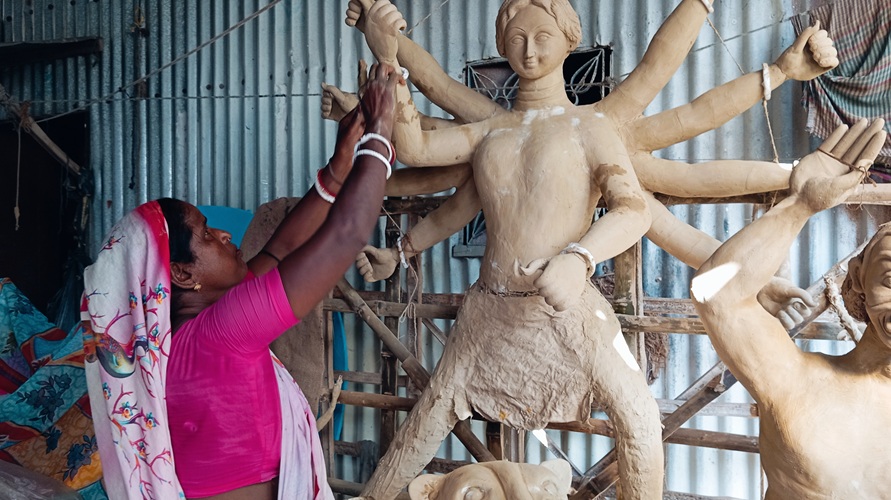
For generations, idol-making has been a family tradition in Paulpara village of Murakuri Union in Lakhai upazila of Habiganj. Today, as the annual Durga Puja approaches, women are playing an increasingly important role in preserving the century-old craft, transforming lumps of clay into intricate images of Goddess Durga with remarkable skill and devotion.
In this traditional potters’ settlement in the haor region, men generally prepare the bamboo frameworks and bind them with straw, while women apply layers of clay, paint the idols and add the finishing touches. Their contribution,
however, extends beyond assisting male artisans. For many families, women have become indispensable to sustaining the ancestral profession and meeting growing demand for idols.
Among them is Niyati Rani Paul, who is busy working on six Durga idols in the courtyard of her home. Her preparations begin months before the festival, sometimes as early as Jyeshtha, the third month of the Bengali calendar. This year, she has received orders from seven different areas.
Born in Harishyaban village of Madhabpur upazila in Habiganj, Niyati had little experience with clay, paint or brushes before her marriage. She learned the craft from her husband and gradually developed her skills through years of practice.
I started working professionally 22 years ago,” she said, adding that the quality of her work gradually earned her recognition and brought orders from different places.
During a recent visit to the village, Niyati was engrossed in giving the idols their finishing touches. As curious neighbours gathered around to watch the figures take shape, she continued working with careful attention to detail. Her husband prepared the structural frameworks, while she supervised and carried out much of the remaining work.
Completing an idol generally takes five to seven days of continuous work, she said. The process can be completed more quickly when an assistant is available.
Niyati hopes to introduce new ideas into the traditional craft while preserving its distinctive character. She said many women in the surrounding area are also involved in making idols, contributing to a tradition that has been passed down through generations.
Gobinda Paul, another artisan who inherited the profession from his forefathers, said the family makes clay pots and household utensils throughout the year to support itself. Orders for Durga Puja, however, provide an important seasonal source of income.
Last year, I made eight idols, while this year I have received orders for 14. It is impossible to complete so much work alone, so the women in our family have stepped in to help,” he said.
He added that women's participation had become essential to keeping up with demand, with their work helping families preserve both their livelihoods and their traditional skills.
Niyati is not alone in this effort. Mira, Nepal, Pratima Paul, Pramila Palu, Kajol Paul and Sita Paul are among the other women actively involved in the craft. Their work illustrates how a traditionally male-dominated occupation is increasingly sustained by the skill and labour of women.
Yet, despite their contribution, artisans say they receive little institutional support.
Pramila Paul, 65, said idol-making had remained a family occupation for generations, with women from several nearby villages participating in the work.
“We have been making idols for generations, but we receive no government assistance. Despite our contribution, we have neither official recognition nor financial support,” she said.
Poor road connectivity is another major obstacle. Transporting raw materials to the village and delivering finished idols to customers can be difficult, adding to the challenges faced by artisans working in a geographically vulnerable haor area.
Pramila believes greater institutional recognition and practical support could help sustain the profession and encourage more women to become involved. For her, women's participation in traditional craftsmanship is also an important route to economic independence and empowerment.
Pranesh Bhattacharya, president of the Lakhai Puja Udjapan Parishad, said idol-making was a household tradition in almost every home in Paulpara.
“Men generally prepare the bamboo framework and bind it with straw, while women apply the clay, paint the idols and decorate them. Women play a crucial role in the entire process,” he said.
The artisans' work is not limited to Durga Puja. They also make idols for Kali Puja, allowing the community to carry its traditional skills into other major Hindu festivals.
Their reputation extends far beyond Paulpara. Buyers from neighbouring areas and districts, including Brahmanbaria, Narsingdi, Habiganj's Bahubal and Madhabpur upazilas, and parts of Sunamganj, place orders with the village's artisans.
Relatively lower prices attract customers from distant locations. Finished idols are also transported by river, connecting the village's traditional workshops with buyers across the region.
For the artisans, however, sustaining this heritage requires more than religious devotion and family commitment. Rising production costs, transportation difficulties and the absence of formal assistance pose continuing challenges to a profession that supports households while preserving a distinctive cultural tradition.
Habiganj Deputy Commissioner Dr AKM Sharfaraz said the administration was examining the situation.
We are examining the issue to understand the actual situation. After the investigation, we will take necessary initiatives to determine how the artisans can be supported, he said.
As the women of Paulpara continue shaping the clay figures of Goddess Durga, their work tells a story that reaches beyond the festival. It is a story of inherited skills, women's growing economic role and a community striving to keep its cultural heritage alive despite persistent hardship.

 সিলেটে ব্যাটারিচালিত দুই অটোরিকশার সংঘর্ষ, নিহত ১ সিলেটে ট্রেনের টিকিট কালোবাজারে বিক্রি, ব্ল্যাকারের এক মাসের কারাদণ্ড অর্থনীতিতে নোবেল পেলেন রবার্ট হল ও মাইকেল উডফোর্ড ‘যত দ্রুত সম্ভব’ ৬৬৬ কোটি টাকার বকেয়া কর আদায়ের নির্দেশ মৌলভীবাজারে ১০২২টি মণ্ডপে চলছে দুর্গাপূজার প্রস্তুতি কাষ্টঘরে হৃদয় হত্যা: মাদক বিক্রি নিয়ে দ্বন্দের জের, ধারণা পুলিশের রবীন্দ্রনাথের গ্রাফিতিতে কালি: প্রতিবাদে সিলেটে ‘দৃপ্ত কণ্ঠে রবীন্দ্রসংগীত’ নাহিদ ও তার স্ত্রীর ‘অসংগতিপূর্ণ’ সোয়া এক কোটি টাকার সম্পদের ‘তথ্য পেয়েছে’ দুদক নিউইয়র্কে শাকিব খানের সঙ্গে দীঘি, যা জানা গেল সিলেটে কাল থেকে ফ্যামিলি কার্ডের তথ্য সংগ্রহ শুরু সিলেটে দুর্গাপূজায় পুলিশের ১২ নির্দেশনা যুক্তরাজ্যে পাঠানোর নামে কোটি টাকা আত্মসাৎ: ঢাকা থেকে সিলেটের ফেমেক্স অ্যাসোসিয়েটের পরিচালক গ্রেপ্তার অবসরপ্রাপ্ত সেনা কর্মকর্তা গুলশান আরা ও দেবাশীষ ৪ দিনের রিমান্ডে সিলেটে বাড়ি ফেরার পথে দা দিয়ে কুপিয়ে কৃষকের কবজি বিচ্ছিন্ন সিলেটে কিশোরীকে ধর্ষণ, একজনের মৃত্যুদণ্ড সিলেটে ব্যাটারিচালিত দুই অটোরিকশার সংঘর্ষ, নিহত ১ সিলেটে ট্রেনের টিকিট কালোবাজারে বিক্রি, ব্ল্যাকারের এক মাসের কারাদণ্ড Women sculptors keep century-old tradition alive in Habiganj অর্থনীতিতে নোবেল পেলেন রবার্ট হল ও মাইকেল উডফোর্ড ‘যত দ্রুত সম্ভব’ ৬৬৬ কোটি টাকার বকেয়া কর আদায়ের নির্দেশ মৌলভীবাজারে ১০২২টি মণ্ডপে চলছে দুর্গাপূজার প্রস্তুতি কাষ্টঘরে হৃদয় হত্যা: মাদক বিক্রি নিয়ে দ্বন্দের জের, ধারণা পুলিশের রবীন্দ্রনাথের গ্রাফিতিতে কালি: প্রতিবাদে সিলেটে ‘দৃপ্ত কণ্ঠে রবীন্দ্রসংগীত’ নাহিদ ও তার স্ত্রীর ‘অসংগতিপূর্ণ’ সোয়া এক কোটি টাকার সম্পদের ‘তথ্য পেয়েছে’ দুদক নিউইয়র্কে শাকিব খানের সঙ্গে দীঘি, যা জানা গেল সিলেটে কাল থেকে ফ্যামিলি কার্ডের তথ্য সংগ্রহ শুরু সিলেটে দুর্গাপূজায় পুলিশের ১২ নির্দেশনা যুক্তরাজ্যে পাঠানোর নামে কোটি টাকা আত্মসাৎ: ঢাকা থেকে সিলেটের ফেমেক্স অ্যাসোসিয়েটের পরিচালক গ্রেপ্তার অবসরপ্রাপ্ত সেনা কর্মকর্তা গুলশান আরা ও দেবাশীষ ৪ দিনের রিমান্ডে সিলেটে বাড়ি ফেরার পথে দা দিয়ে কুপিয়ে কৃষকের কবজি বিচ্ছিন্ন সিলেটে কিশোরীকে ধর্ষণ, একজনের মৃত্যুদণ্ড রাজনৈতিক আশ্রয় আবেদন: বাংলাদেশকে ‘সেইফ কান্ট্রি’ হিসেবে বিবেচনা করছে ইইউ সিলেটে যুবদল নেতা বদরুল হত্যা: সন্দেহভাজন আসামি আটক বৃহস্পতি ও শুক্রবার বন্ধ থাকবে এলপিজির দোকান Habiganj Transport Workers Hold Tri-Annual Meeting, Form Election Commission Calling for Unity সিলেটে সাড়ে ৪ হাজার কুকুরকে ভ্যাকসিন দেবে সিসিক, কার্যক্রম শুরু সিলেটে ‘স্ত্রীর ছবি তোলার প্রতিবাদ করায়’ যুবককে কুপিয়ে হত্যা একদল লোক ব্যানার নিয়ে এসে একের পর এক ঢিল ছোড়ে জানুয়ারি থেকে ৫ ধাপে ইউপি নির্বাচন, তারিখ চূড়ান্ত সিলেটের ‘বিলাই ম্যাও ম্যাও’ এখন ভারতের সিনেমায়


Design and Developed by
 IT Lab Solutions Ltd.
IT Lab Solutions Ltd. - Top software and web development company in Bangladesh.






আপনার মন্তব্য