
06 July, 2025 23:34
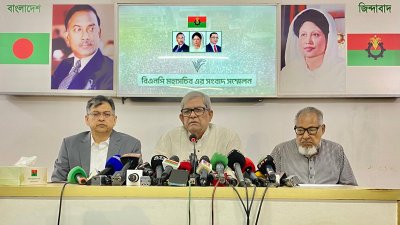
A section of people is conducting a “highly planned propaganda” campaign to label the Bangladesh Nationalist Party (BNP) as “anti-reform,” according to BNP Secretary General Mirza Fakhrul Islam Alamgir.
He made these remarks during a press conference on Sunday (July 6) morning at the BNP Chairperson’s office in Gulshan.
Fakhrul stated, “Certain sections of the media and some individuals are making various comments about BNP’s stance on reforms, which are not accurate. There is no question about BNP’s commitment to reforms. BNP is the party that, under Begum Khaleda Zia in 2016, spoke of ‘Vision 2030’ for reforms. Later, in 2022, we presented a 27-point reform agenda, and after discussions with other parties, we put forward a 31-point reform program in 2023. We have sincerely organized numerous programs across the country for this 31-point agenda, reaching out to the public, intellectuals, and civil society to discuss it.”
He added, “Today, a certain group, a clique, is making a deliberate attempt to portray BNP as anti-reform.”
Highlighting BNP’s steadfast role in the 15-year movement to restore democracy, Fakhrul said, “You’ve seen and covered our numerous programs, rallies, and the repression we faced. Why is this question being raised about BNP now? I can only call it a motivated effort.”
He continued, “This is merely an attempt by a group to malign and misrepresent BNP. Some individuals or groups will keep spreading lies, thinking the public will respond to it. But the public isn’t responding. The public doesn’t mean a handful of urban elites; it means the people across Bangladesh.”
Fakhrul emphasized, “BNP has proven that it was our party, under Ziaur Rahman, that established multi-party democracy. Freedom of speech, press freedom, freedom to organize, parliamentary democracy, and even accepting the caretaker government system for three elections—all of this was done by BNP. The free market economy, bringing in the private sector, and earning accolades like ‘Emerging Tiger’—all these reforms were driven by BNP. Even the VAT system, which we faced criticism for at the time, was part of our reforms.”
He added, “Trying to misinterpret these achievements or create a negative perception about BNP will not yield results. The people of Bangladesh know BNP and have stood by it. Whatever good has been achieved, BNP has been at the forefront and provided leadership.”
Those Delaying Elections Are Not Forces of Democracy’
Fakhrul remarked, “Those who want to delay elections are certainly not forces of democracy or supporters of the July-August revolution.”
During the press conference at the Chairperson’s office in Gulshan, the BNP Secretary General also presented a summary of the issues on which BNP has reached a consensus with the National Reform Commission regarding reforms.
‘July Declaration: BNP Submitted Its Opinion Long Ago’
On the July Declaration, Fakhrul said, “We provided our opinion on the initial proposal long ago. The government then said they would take responsibility and move forward, but they haven’t brought anything forward yet.”
He added, “We have always been open to discussions on any issue at any time, and we still are. There’s no problem in that regard.”
BNP Standing Committee member Nazrul Islam Khan said, “We submitted our opinion on the July Charter long ago. It’s not our responsibility if others aren’t acting on it. If those responsible delay for any reason, BNP won’t take the blame for it.”
‘BNP Expects Elections in February’
Addressing concerns about whether delays in implementing reforms or the July Charter might jeopardize elections, Fakhrul said, “We have clearly stated that we believe the people want elections, as discussed between our Acting Chairman Tarique Rahman and Chief Adviser Professor Muhammad Yunus regarding holding elections in February. We hope the country will move toward that goal.”
On the National Constitutional Council (NCC)
Standing Committee member Salahuddin Ahmed said, “We have clearly stated that to prevent the rise of any authoritarianism or fascism, there should be no system allowing it. No country in the world has a precedent for fixing a prime minister’s tenure. Despite this, based on the decision of BNP’s high-level committee, we have said no individual should remain prime minister for more than 10 years.”
He added, “We also stated that no other organ or body should be created to interfere with the prime minister’s or parliament’s ability to effectively govern the state. That’s why we didn’t agree with the concept of an NCC. That was our condition.”
However, Salahuddin Ahmed, who leads BNP’s delegation to the National Consensus Commission, said, “I hope we can reach a consensus. Discussions are ongoing, but prolonged discussions are not desirable. Through discussions, we can reach a consensus on key constitutional issues. We are optimistic.”
On Proportional Representation (PR)
Standing Committee member Nazrul Islam Khan said, “Have you asked those advocating for PR what kind of PR system they want? Democracy is a concept, but it’s practiced differently in different countries. The way it’s practiced in the U.S. isn’t the same as in the UK, France, India, or Sri Lanka. Each country has its own way of implementing democracy.”
“Similarly, PR is a concept implemented differently in various countries. Those talking about PR aren’t specifying how it would be implemented, leaving it vague. This is just discussion for the sake of discussion. We believe the people of this country are the ones who should make decisions.”
Citing the example of the EVM system, he said, “We introduced the EVM system for voting, and you all know how much effort went into public awareness and training for it. There were even allegations of corruption related to allowances for training. Despite all this, the EVM system hasn’t been fully implemented. PR, on the other hand, involves changing the entire electoral system. Has anyone discussed this with the public, civil society, or political parties? PR is still at a very preliminary stage, and formal discussions haven’t even started in the National Consensus Commission. Yet, some colleagues are saying it must happen, or elections can’t take place. What does this mean?”
Nazrul added, “Our Secretary General has said we want reforms the most and have done the most for reforms. The groundbreaking reforms in Bangladesh were done by us. Accusing BNP, which proposed comprehensive reforms when others hadn’t even uttered the word, is highly unjust.”
He continued, “The political motive behind this isn’t good. We are in politics and ready to face criticism, but political activities must align with the aspirations of the millions of martyrs of the Liberation War and the thousands in various movements, especially the 2024 uprising. Any system must have public consent. Major decisions require careful thought, not changes for the benefit of a specific party.”
‘PR Voting: Voters Won’t Know Their Representative’
Nazrul Islam Khan said, “PR is simple—voters won’t know who their representative is. Is that right? Still, when the issue comes up, we will discuss it. We have no objection to discussions. Our representatives are discussing all day and listening to other parties’ views.”
BNP Wants to Come to Power Through Elections’
Fakhrul said, “There’s a motive behind this, and it needs to be understood. We’ve said before, and I emphasize again, BNP is a tested, democratic political party. We are a liberal democratic party, plain and simple. We want to come to power through elections, through the people’s vote. We don’t want to seize power through revolution or any other means.”
“There should be no doubt about our intentions. For 15 years, we’ve been fighting and struggling for one goal—to return to democracy. The fascist Hasina government destroyed democracy. We want to restore democracy, starting with regaining our voting rights, freedom of speech, and the right to fair justice.”

 আওয়ামী লীগের শীর্ষ নেতৃত্বে আসছে যে তিন নতুন মুখ বেতার কণ্ঠশিল্পী সংসদের নতুন কমিটির যাত্রা শুরু সাভারে সিলিন্ডার বিস্ফোরণে নিহত ৬, আহত ২০ এবার লিটারপ্রতি ২০ টাকা করে বেড়েছে জ্বালানি তেলের দাম ফ্ল্যাটে তরুণীর মরদেহ: স্ত্রীসহ পুলিশ হেফাজতে জামায়াত-এমপি নজরুল মরিয়মের মৃত্যু: পাশের কক্ষেই ছিলেন এমপি নজরুল জাফর ইকবালসহ ৮ জনের বিরুদ্ধে গ্রেপ্তারি পরোয়ানা মঙ্গলবার শাহজালাল মাজার ব্যবস্থাপনা কমিটির সভা ডেকেছেন বাণিজ্যমন্ত্রী এমপি গাজী নজরুলের সাথে থাকা সেই তরুণীর মরদেহ উদ্ধার হত্যার পরদিন অপ্রতিমের মায়ের সাথে দেখা করে স্বান্তনা দেয় ‘খুনি’রা সিলেটে দুর্গামণ্ডপে ঢুকে প্রতিমা ভাঙচুর, যুবক কারাগারে নতুন কমিটি পেল সিলেট জেলা ও মহানগর যুবদল, দায়িত্বে কারা সিলেটে ভোক্তা অধিকারের অভিযানে যে কারণে জুতার দোকানে তালা হবিগঞ্জে চা বাগান থেকে বৃদ্ধের মরদেহ উদ্ধার জগন্নাথপুরে নদীতে গোসলে নেমে শিশু নিখোঁজ, দুইদিন পর ভেসে উঠল লাশ আওয়ামী লীগের শীর্ষ নেতৃত্বে আসছে যে তিন নতুন মুখ বেতার কণ্ঠশিল্পী সংসদের নতুন কমিটির যাত্রা শুরু সাভারে সিলিন্ডার বিস্ফোরণে নিহত ৬, আহত ২০ এবার লিটারপ্রতি ২০ টাকা করে বেড়েছে জ্বালানি তেলের দাম ফ্ল্যাটে তরুণীর মরদেহ: স্ত্রীসহ পুলিশ হেফাজতে জামায়াত-এমপি নজরুল মরিয়মের মৃত্যু: পাশের কক্ষেই ছিলেন এমপি নজরুল জাফর ইকবালসহ ৮ জনের বিরুদ্ধে গ্রেপ্তারি পরোয়ানা মঙ্গলবার শাহজালাল মাজার ব্যবস্থাপনা কমিটির সভা ডেকেছেন বাণিজ্যমন্ত্রী এমপি গাজী নজরুলের সাথে থাকা সেই তরুণীর মরদেহ উদ্ধার হত্যার পরদিন অপ্রতিমের মায়ের সাথে দেখা করে স্বান্তনা দেয় ‘খুনি’রা সিলেটে দুর্গামণ্ডপে ঢুকে প্রতিমা ভাঙচুর, যুবক কারাগারে নতুন কমিটি পেল সিলেট জেলা ও মহানগর যুবদল, দায়িত্বে কারা সিলেটে ভোক্তা অধিকারের অভিযানে যে কারণে জুতার দোকানে তালা হবিগঞ্জে চা বাগান থেকে বৃদ্ধের মরদেহ উদ্ধার জগন্নাথপুরে নদীতে গোসলে নেমে শিশু নিখোঁজ, দুইদিন পর ভেসে উঠল লাশ মোবাইল ফোন ছিনিয়ে নিতেই অপ্রতিমকে পিটিয়ে হত্যা : পুলিশ অপ্রতিম হত্যার রহস্য উদঘাটনের দাবি পুলিশের আট মাসে ৩৬ নিখোঁজ শিশুর মরদেহ উদ্ধার, এখনও নিখোঁজ প্রায় দুই হাজার অপ্রতিম হত্যা: আটক তুহিনের বাড়ি থেকে সেই আইফোন উদ্ধার অপ্রতিম হত্যা: সিসিটিভি ফুটেজ দেখে ৩ জনকে আটক সিলেটে মাদ্রাসায় না পড়তে ‘নিজেরাই আত্মগোপন’ করে সেই দুই কিশোর, যেভাবে উদ্ধার সিলেটে প্রধানমন্ত্রীকে নিয়ে ‘কটূক্তির’ অভিযোগে ছাত্রলীগ কর্মী আটক সিলেটে কারাগার পরিদর্শন করলেন স্বরাষ্ট্র মন্ত্রণালয়ের সিনিয়র সচিব এমসি কলেজ বাংলা বিভাগ অ্যালামনাইর সভা অনুষ্ঠিত বিয়ানীবাজারে চাচার বিরুদ্ধে পঞ্চম শ্রেণির ছাত্রী ভাতিজিকে ধর্ষণের অভিযোগ


Design and Developed by
 IT Lab Solutions Ltd.
IT Lab Solutions Ltd. - Top software and web development company in Bangladesh.






আপনার মন্তব্য