
20 October, 2025 22:09
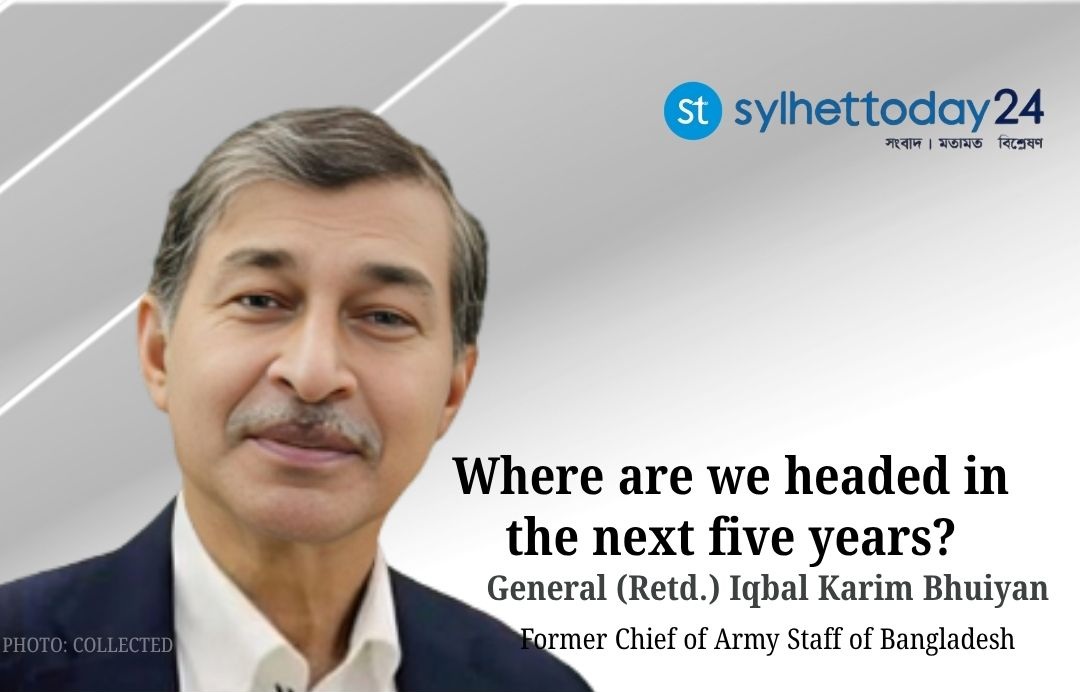
On August 5th, 2024, Bangladesh experienced a watershed moment. A fifteen-year fascist regime was overthrown, and its old state structure, including the police, judiciary, and civil administration, was dismantled by revolutionary fervour that swept across the country. The revolution, which started with the quota reform movement in June, quickly escalated into a full-blown eruption, burying the old fascist structure within weeks. This event puzzled revolutionaries and other stakeholders. A similar event happened in 1971 when Bangladesh emerged from the ashes of East Pakistan left behind by the Pakistan Army.
August 5th offered a vista of golden opportunities for Bangladesh to rebuild and modernise its political, social, economic, and administrative systems. It presented a rare opportunity to implement a comprehensive social reconstruction based on French revolutionary ideals of Liberty, Equality, and Fraternity, instead of incremental reforms proposed by a few commissions. An exceptional prospect surfaced to transition the country from chaotic democracy to a robust democratic system free from dynasty-based rule. A fantastic chance was created for economic emancipation through an equitable distribution of national wealth, ensuring social equality and justice for all citizens. And finally, a lucrative opportunity was created for restoring religious freedom ending discriminatory practices concealed under secularism.
Regrettably, the country took a different turn. Instead of seizing opportunities, it quickly reassembled the old structures by filling in the gaps left by the defeated party. The police, judiciary, and civil administration were all taken over by the surviving major political party, leading to the rapid capture of important posts and accelerated promotions flouting government rules. The properties and businesses of the past regime changed hands and illegal toll extortions continued. The photographs of Sheikh Mujib, Sheikh Hasina, and Sajib Wajed Joy displayed in the posters were replaced by a new set of faces and highways and major roads were adorned with the images of the leaders of BNP, signaling the continuation of old practices. In essence, one group of predators was just replaced by another.
The degeneration of the revolution began with the formation of the interim Government. Mr. Asif Nazrul, student coordinators, and political party representatives selected its members under the tutelage of President and Army Chief. Every interested party sought as many candidates as possible, disregarding their ability to handle the new responsibilities. While appointing Mr. Yunus as Chief Advisor was wise, the other members lacked statecraft and followed their sponsoring party’s instructions, making the Government weak from the start.
Dr. Yunus’ appointment as Chief Advisor was a brilliant choice. He became a national rallying point after the revolution. With his reputation abroad, he effectively thwarted Indian ‘Islamic fundamentalism’ and ‘minority’ cards by courting favour from the West. His connections with global leaders restored Bangladesh’s economy from a free fall to an even keel. However, despite his positive qualities, Dr. Yunus was too civilized to swim in the muddy water of statecraft and was ageing rapidly. Despite these challenges, the nation needed him during the crisis to guide it. The government stumbled at every step, facing constant pressure from the parties that vied to replace them as quickly as possible.
BNP benefited most by appointing favoured advisors to key cabinet positions and Mr Ali Imam Mozumder as special assistant to Dr Yunus. Through these connections, they strategically placed their chosen individuals in crucial appointments within the police, judiciary, and civil administration. This led to four distinct power centres, each with its own parallel administration: one led by Dr Yunus, another by BNP leadership, a third by the Army leadership, and a fourth by the student leadership. In such a milieu, it is understandable that interests of these groups would constantly collide with each other, hindering the effective functioning of the Government.
The student revolutionaries’ mistake was joining the existing political structure by forming their own party instead of building a new Bangladesh. Their ambivalence in declaring the July Proclamation and decision to participate in the forthcoming election led to their return to the old system. Inexperienced and lacking a clear vision, they were swayed by BNP and other parties into forming a party that stripped them of their post-revolutionary dominance. They failed to remain a revolutionary force backing the current interim government that faced the formidable task of implementing sweeping reforms. Instead, they were ensnared in the antiquated system they sought to replace. The weak interim government, lacking support, faced pressure from groups who never had been at the forefront during the uprising but wanted to hijack the fruits of the revolution and be in power. As a result, the nation missed the chance of establishing a modern Bangladesh.
BNP, which had long faced persecution from its archrival Awami League, is now a counter-revolutionary force. They opposed the current Government’s revolutionary moves, such as banning the fascist regime and its student wing, changing the President, abrogating the Constitution, and implementing deep reforms. BNP supports the status quo because it’s more comfortable with the earlier bipartisan politics where its major opponent is now almost non-existent. They believe a cakewalk election is inevitable and see the student force as a jigsaw puzzle. They are reluctant to confront the student body within a new democratic framework, fearing that the power they now have a chance to seize could slip away if the old system is dismantled and new dynamics emerge. BNP expects that if the student body is absorbed into the old structure, it will bleed out like ‘Nagorik Oikko’.
Bangladesh is currently in a complex web of competing interests and conflicting ideologies. Various groups are vying for greater influence and political gain, with key issues at stake, including the formation of a caretaker government or a national unity government, the possibility of holding a free-fair election, the fate of the Awami League and its student wing, the prioritisation of reforms or elections, and the choice between using the old or a new constitution for elections. Despite these debates, no consensus seems to be in sight, leading to a situation where individuals are using their resources to outmanoeuvre others for dominance.
2
The future trajectory of Bangladesh remains uncertain, but analysis of national and international actors, the prevailing geostrategic landscape, the country’s historical pattern of behaviour, the quality of governance, and its potential for recovery and turnaround can provide valuable insights into the likely outcomes.
Predicting state behaviour over a specific period is challenging, but short-term forecasts, like those for the next five years, are more likely to be accurate. Therefore, an analysis of Bangladesh’s potential trajectory in the next five years, given the current chaotic situation, has been attempted.
Internationally, this period coincides with the presidencies of Trump, Xi Jinping, Modi, and the Myanmar junta. The Rohingya issue will persist, while the Arakan Army may gain territory but won’t fully liberate Rakhine State.
The ‘Group of Four’ (India, the Army, BNP, and Awami League) will press for an immediate election due to their shared interests. The student body, as a group or political party, will remain a significant force capable of mobilising strong resistance.
The interim government will face pressure from vested groups on issues like the constitution, elections, reforms, good governance, and the banning of the Awami League and its student wing.
Considering these factors, let’s analyse the potential outcomes and their implications for Bangladesh’s future.
India has always been the most influential actor in Bangladesh’s political, social, economic, and security architecture. Its influence was particularly strong after the Liberation War, during General Ershad’s reign, and during Awami League rule. India deliberately helped Sheikh Hasina and the Awami League drift from democratic practices and turn into a fascist regime, exploiting its downslide to further its own interests. In exchange India provided legitimacy to the Awami League government after every farcical election. August 5th proved to be a cataclysmic foreign policy disaster, as India’s 17-year domination collapsed in a matter of days, leaving the people at the South Block bewildered. India’s soft power among Bangladeshi politicians, businessmen, cultural activists, media moguls, bureaucrats, fashion houses, and so on, was devastated. The old cards of ‘Islamic Fundamentalism’ and ‘Minority Suppression’ were no longer effective. It seemed that the ‘twin tower’ had collapsed, and they would have to rebuild it from scratch.
Bangladesh holds strategic importance for India due to its proximity to seven Indian states in the northeast. China’s claim to Arunachal Pradesh, the region’s diversity, and local secessionist sentiments have concerned India about its potential separation. These states, connected by the Siliguri corridor, face isolation if China invades. Bangladesh becomes crucial as it provides transit from the mainland to northeastern India if the corridor is cut off. This transit is vital for developing the region and exploiting its resources. A network of transit routes through Bangladesh aims to make West Bengal a manufacturing hub, supplying essentials to Assam, Meghalaya, Nagaland, Manipur, Arunachal Pradesh, Tripura, and Mizoram. Under Sheikh Hasina’s leadership, India secured transit agreements through Chittagong and Mongla ports. However, after Sheikh Hasina’s ouster, the interim government hesitates to implement them, causing uncertainty. Tensions also escalated with Pinaki Bhattacharya’s ‘Boycott India’ program and visa restrictions. The Indian diaspora, especially, feels insecure about working in Bangladesh. India’s approach to addressing these issues remains unclear.
While everyone expected that Modi would go for damage control by holding out an olive branch to Dr. Yunus, India opposed building relations with the new interim government. It sheltered Sheikh Hasina and her activists, allowing her to conduct political activities from within its borders. Modi’s negative attitude was evident in refusing to meet Dr. Yunus, slapping of visa restrictions on Bangladeshi medical visitors, and antagonistic propaganda against the revolution and the interim government. India disapproved of the events in Bangladesh and was adamant to restore the old status quo.
Historically, it staked everything on a single party—the Awami League—and when that gamble backfired and its credibility cracked, the only remedy was to patch the party up anew and reinstall Sheikh Hasina at the helm.
India is in a hurry. With Sheikh Hasina’s age approaching and no alternative leadership in sight, India would attempt this course of action quickly. To achieve this, it likely would pressure for an immediate election, knowing that the Awami League would be unable to surface if the interim government stays in power. This election would serve three purposes: remove Dr. Yunus, whom India regards as the most formidable barrier to tightening its grip on Bangladesh and bending it to its will; prevent the student revolutionaries from implementing reforms that could alter the political landscape in ways that could hinder the Awami League’s rehabilitation; and usher in a weak political government—one pliable enough to grant the Awami League the breathing space it needs to quietly regroup and reemerge.
India is pursuing two paths to achieve its goal. Firstly, BNP, driven by its desire for immediate power perfectly fit into India’s plan. India first engaged BNP to pressure the Yunus Government for an immediate election. If that fails, it will consider the second path: the Armed Forces. In a deteriorating law and order situation, India would encourage a military takeover. After a few years, India would encourage the military to secure an electoral victory for the Awami League in exchange for a safe exit. However, this scenario is unlikely due to the Armed Forces’ fatigue from prolonged deployment. India would still consider keeping the Armed Forces in the ‘Group of Four’ to pressure the Yunus Government into holding an immediate election.
3
With President Trump in office, the future of US-Bangladesh relations is uncertain. Some speculate that Dr. Yunus’s strong ties with Democrats could hinder relations, but Trump’s pragmatic approach suggests this is unlikely. India will remain a key player in US South Asian policy, with Pakistan and Bangladesh sidelined. The extent to which the US views Bangladesh through India’s lens will be clear in the near future. Trump’s response to Modi on the Bangladesh issue and his softer approach in imposition of tariff on Bangladeshi products highlight their divergent views on international issues.
Predicting Trump’s foreign policy in his second term is premature, but it’s reasonable to assume he’ll continue his aggressive approach. His ‘America First’ policy will likely dominate the world, and he will use tariffs to protect US interests. The impact of this ‘Trumpian Reality’ on our textile industry will determine our international standing. Trump will likely leave South Asian inter-state relations to the states, avoiding meddling in their internal affairs. This will deprive India of opportunities to pressure Bangladesh through ‘Islamic Fundamentalism’ and ‘Minority’ cards. US trade sanctions and other restrictions are unlikely to be applied to us in the next five years, regardless of the situation’s evolution.
Trump’s foreign policy, hinted at through national strategies for cyber security and AI, has been confrontational towards China, criticising its abuses. He withdrew the US from global climate efforts, threatened European nations with NATO abandonment, and cut government spending to combat inflation. Trump also aims to reduce legal and illegal immigration, supports Israel and Saudi Arabia, maintains a hostile posture towards Iran, and aims to resolve the Russo-Ukraine war by warming relations with Putin.
Bangladesh was significantly impacted by Trump’s Indo-Pacific strategy during his first term. The extent of his pursuit in the current term would determine how close we can get to China and reap its economic clout. India, exploiting the Sino-US rivalry, will hinder China’s projects like the Teesta River Project and BRI, claiming they harm US and Indian interests. India will pressure Bangladesh to implement transit deals linked to Sheikh Hasina and suppress Islam in the name of secularism. While Dr. Yunus’ personality and global connections can withstand these challenges, an elected government of BNP or any other party would face difficulties, lacking his diplomatic prowess. Diplomatically, the next five years will be challenging for our Foreign Ministry guys.
Sheikh Hasina’s downfall on August 5th brought both opportunities and challenges for China. India’s soft power weakened, giving China a better chance of becoming a key player. However, China is concerned about its earlier investments and the loss of a key ally(Sheikh Hasina) with whom it had a comfortable business relationship.
China has invested 3 billion dollars in Bangladesh since 2019 and currently runs 14 projects worth 10 billion dollars. Sheikh Hasina signed over 20 agreements with China during her visit to Beijing in July, but their fate is uncertain. On India’s insistence, despite nixing deep-sea port at Sonadia and the Teesta River Project, China maintained a harmonious relationship with Sheikh Hasina based on opportunistic and pragmatic principles.
Her ouster perplexed China, but it quickly shifted to protect its investments and agreements. China forged a new friendship with its old ally, BNP, which had historically been pro-China. However, tensions grew when China tilted towards the Awami League and congratulated Sheikh Hasina after each election. The Chinese Ambassador’s immediate rush to congratulate Sheikh Hasina after the 2019 election was particularly notable.
China aims to reduce tensions by applying the same two principles it used during the Awami League’s time: opportunism and pragmatism. It will closely monitor the evolving political landscape, with revolutionaries and old parties clashing.
The evolving geopolitical situation in Myanmar poses a significant challenge to Dhaka, and this may persist. Myanmar government forces still control areas predominantly inhabited by the Bamar people. The People’s Defence Force (PDF), the armed wing of the National Unity Government (NUG), appears to be losing momentum due to the ongoing ethnic conflict. Bangladesh shares a border with Myanmar’s Chin and Rakhine states, which are now under the control of pro-PRC Ethnic Armed Organisations (EAOs), particularly the Chin National Army (CNA) and Arakan Army (AA). Dhaka has no formal or informal ties with these EAOs, but Beijing could facilitate connections. This connection is crucial as Bangladeshi insurgent groups like the Kuki-Chin National Front (KNF) are based in the Chittagong Hill Tracts (CHT) but receive training in Myanmar, which serves as a safe haven.
The Rohingya crisis also affects Bangladesh. As Myanmar’s junta loses ground to the AA, particularly in the Rohingya-inhabited northern and central areas of Rakhine State, voluntary repatriation of Rohingya refugees in Bangladesh likely depends on the AA’s goodwill. A line of communication between Dhaka and the AA has been established to convince the latter to create a secure environment for this voluntary repatriation, thanks to the efforts of Dr Khalilur Rahman, High Representative to the Chief Adviser. The implementation of these reforms in the next five years is uncertain due to Bangladesh’s volatile political situation.
4
Bangladesh’s trajectory depends on whether it continues with an interim government or holds a national election to form an elected government and initiate reforms. Historically, political parties haven’t shown strong commitment to reforms. Even the BNP, despite election promises, couldn’t implement simple reforms like repealing section 54. The Awami League initiated reforms for negative purposes. Given past experiences, one can safely assume that, positive reforms can only be executed by a neutral interim government, not political parties.
The BNP leadership talks of a national government, but its meaning and tasks are unclear. We speculate such a government might build consensus across existing parties, unlike the current interim government. However, this idea is challenged by potential conflicts of interest between the BNP’s 31 points and reforms suggested by interim government commissions.
Dr Yunus has pledged to hold the national election by next February, but this is practically impossible due to the many tasks that need to be completed. Despite the election commission’s competence under Mr Naser’s guidance, weaknesses exist in the organizations responsible for executing the election. The BNP-controlled civil administration, police, and judiciary remain in disarray, and the military’s deterrence effect has been diminished due to prolonged deployment. Weapons looted from police stations have not been recovered, and the law-and-order situation remains poor. If BNP insist on getting the Awami League in the next election, it will face strong resistance from students and Jamaat e Islami. It may turn out to be a pipedream due to Awami League leaders’ inability to reemerge from their hidings. Besides, there is ongoing controversy about who will carry out the reforms –interim government or an elected government. There’s also a low level of discussion about changing the constitution, but the chances of this escalating into a major uproar are not entirely dismissed. If that happens, the country will have to go through time-consuming processes like electing a constituent assembly, drafting a constitution, and arranging referendums.
Let’s consider a few possibilities that could predict the future around the next election.
The first scenario is holding an election within the interim government’s promised timeframe. The election commission faces opposition from students over the Awami League’s participation, holding the election before signing July Charter and implementing reforms, and drafting a new constitution. Students may compromise on the last two, but they’ll likely resist the first. Jamaat e Islami’s insistence on conducting the voting on ‘Proportionate Representation’ has also not been settled. Resistance would be stronger if they feel unprepared to face BNP. In that case, they’ll buy time, focussing on confrontational issues to organise and prepare for a stronger fight later.
If the election commission resolves disputes, it faces the next challenge: holding a free, fair, credible, and inclusive election. Festive election like 1991, 1996, and 2001, seems unlikely due to the weak interim government and deteriorating law and order. Awami League’s non-participation raises questions about inclusivity. India, preferring an early election, would aim to portray it worse than the 2014, 2019, and 2024 elections to gain control over the winner party. Rigging, killing, and violence by Awami League party cadres and the rebel/dummy candidates are possible. If the interim government struggles to hold a free and fair election by February, it may postpone it for a year or so, but this won’t improve the election’s quality. Until the civil administration, police, and judiciary are revamped and law and order improved, a credible election remains elusive. This extra time will only prolong dissatisfaction.
In the second scenario, the government, backed by students, Jamaat e Islami and social media, aims to implement reforms before the election. With commitment, the government could swiftly implement these reforms within two to three years, especially if it reshuffles the cabinet with young and energetic faces. However, the ‘Group of Four’, who prioritises expediting elections, will strongly oppose such a decision.
The Group of Four has four main concerns. Firstly, July Charter and reforms could alter the political and social landscape, challenging their agendas. Secondly, it would give student revolutionaries time to form a formidable opposition, hindering the newly elected government’s progress, similar to the Awami League’s journey. Thirdly, reforms might disrupt their traditional governance style. Lastly, it would prolong Dr. Yunus’s tenure, enhancing his image and reputation, which could counter the new incumbent if they fail to deliver.
If the government, supported by students and Jamaat e Islami pushes for reforms, the Group of Four will oppose it, leading to anarchy with the BNP (covertly aided by the Awami League) and students/Jamaat clashing.
The third scenario, involving the dismantling of the old constitution and the creation of a new one, is the most radical. BNP’s counter-revolutionary move has made it unlikely, but the revival of the demand can’t be ignored given the youthful revolutionary fervour still boiling among the youth. This would have been the best course of action to establish a new Bangladesh, but it was lost amidst the confused scuffles over minor issues after the revolution. Our leadership failed to nurture the spirit of the July revolution and guide society to a peaceful and prosperous future. They failed to realise that Bangladesh before and after 5th August were different, just as our predecessors failed to understand Bangladesh before 26th March and after 16th December. Whether this feeling can be revived or is lost is uncertain. If it is retrieved, it could cause serious unrest, with BNP and Awami League joining forces against the weak interim government. In that case, India would likely intervene to secure victory.
5
A crucial question remains: how would BNP fare if elected, either peacefully or through a rigged and violent election? If the election is held, it’ll likely be contested between BNP, Jamaat, and Students. Jamaat, though strong, lacks public appeal like BNP due to its weak electoral infrastructure. While a mishap like the 1991 election is possible, it seems unlikely given its current acceptance level. It might gain seats exploiting anti-BNP sentiment, but it’d still have to share the benefits with NCP. However, NCP’s lack of electoral knowledge and undeveloped party infrastructure makes a victory unlikely.
Speculation surrounds BNP’s government functionality. Challenges are multifaceted, requiring simultaneous efforts. Party workers will seek influential government positions and engage in corrupt practices, similar to the Awami League. Rebuilding the civil administration, police, and judiciary is a formidable task. These institutions are still fragile due to the interim government’s inaction. Party-loyalists appointed through advisors have already demonstrated inefficiency in tackling the current issues.
India would try to push through their own agenda, often at Bangladesh’s expenses, raising concerns about transit, the Teesta River Project, Chittagong and Mongla ports, the Rampal power plant, electricity imports from the Adani Power Plant, and radar installations along the Bay of Bengal coast. Reluctance to concede to India’s demands will make India hostile to the BNP, while concessions could trigger violent opposition movements, particularly from NCP and Jamaat. Failure to comply might lead India to destabilize the country through Awami League cadres and international pressure, using old cards of fundamentalism and minority repression.
The fragile economy may worsen, potentially paving the way for Awami League and Sheikh Hasina’s return to power. The Awami League’s misrule over the past 15 years hasn’t erased BNP’s mischief between 2001 and 2006, and people are skeptical that the BNP leadership can counter India’s aggressive designs and improve Bangladesh’s standing.
If the interim government pushes for reforms before the election or faces pressure to amend the constitution, its tenure will likely be extended. In that case the country is likely to remain in doldrums for certain periods. To revitalise the government, the cabinet needs fresh faces. If this fails, a national unity government may be formed based on consensus. Identifying and assembling talented individuals is crucial for everything, from elections to reforms and a new constitution. Political parties must prioritise candidates based on merit, not loyalty, as vested interests may attempt to weaken the government for their own agenda. The cabinet must withstand external and internal shocks while completing its mission.
The French Revolution led to Napoleon’s meteoric rise, claiming, “I am the revolution.” Is such a thing possible in Bangladesh? Probably not. The current military leadership and ranks are tired of the revolutionary and reform processes and eager to return to their barracks.
However, what if the election program fails, the police force remains in disarray, or the new government and police force still need the Army’s presence? What if reforms are made before the election or a new constitution is formulated? Will the Army continue to maintain its presence?
I believe the Army should withdraw its troops, regardless of the election outcome. The police won’t be activated while the military is on the ground. The interim government should whip up this idle horse and put it in the race.
The police were identified as the main culprit in the August revolution, but they were promoted after the revolution before the perpetrators were held accountable. Should we accept their fear of reprisal as an excuse for not performing their duties? If there’s no fear of promotions, should we allow fear to justify inaction?
6
We must also consider the student groups that led the revolution. They spearheaded the uprising, which was joined by other segments of society and spread throughout major cities. Bangladesh exploited this gift. Initially, it was a protest against job quotas, but underlying issues surfaced: social inequality, the growing wealth gap, and insensitivity of the ‘political class’.
The movement began peacefully, led by a leaderless group, but descended into violence after the Awami Student League’s goons, police, and military intervened. After all these days, their revolutionary spirit seems to be fading due to their misguided slide into the old-fashioned political structure. Instead of maintaining vigilance over political parties and governments as a revolutionary force, they unwittingly entered politics, giving up their watchdog role that would have prevented future authoritarian rule.
Now that they’ve formed a political party, let’s assess their potential and the extent of reforms they aim to implement in society. Student leaders like Nurul Haque Nur and Jonayed Saki gained prominence through the quota reform and anti-sexual harassment movements, respectively. Later, they launched their own parties, the ‘Bangladesh Gono Odhikar Porishod’ and the ‘Mass Solidarity Movement’, but they’ve since become insignificant in Bangladesh’s political landscape, forming only alliances. Will National Citizen’s Party face the same fate? It’s too early to say, but they must offer something more appealing than BNP and Awami League. The popularity of these two major parties stems from the personality cults of Ziaur Rahman and Sheikh Mujib, with symbols like the ‘sheaf of paddy’ and ‘boat’ influencing voters. However, they have limitations in envisioning Bangladesh’s future due to its numerous challenges. They spend much time debating the nation’s father and independence declaration. Awami League aims to promote Bangladesh from a LDC to a mid-income country, while BNP’s vision is confined to a not-so-well-articulated 31-point program. Can students provide a more appealing vision to their countrymen?
Before outlining their vision, students must clearly state their reasons for forming a political party. Are they seeking to compete with the BNP, capitalising on the political vacuum left by the Awami League’s departure? Or are they driven by the desire to implement reforms they initially cherished but found challenging without merging into the existing system? Perhaps they aim to unite student groups or create a counterweight to BNP’s dominance. Or are they concerned about surviving persecution if the Awami League returns to power?
The party’s ideology and political stance are crucial. Will it be centrist, ideologically driven, right-wing, or left-wing? Additionally, its views on core national issues like nationalism, the founding father, the declaration of independence, and dynasty-based rule are essential.
Lastly, the party’s manifesto and implementation plan are vital. Until these aspects are clearly communicated, people will have serious misgivings about the party’s true intentions and viability.
Formulating a national vision is a difficult task. It involves articulating long-term and mid-term goals and the basis for developing strategies and implementation plans. Until a vision resonates with the nation, like Sheikh Mujib’s six-point program or Ziaur Rahman’s 19-point program/green revolution, or for that matter Jamaat’s pledge for Islamic democracy and welfare, the party proposing it faces political setbacks. The vision should reflect the common people’s desires. Properly prepared, it should compete with the Awami League’s ‘spirit of the Liberation War’, BNP’s ‘Bangladeshi nationalism’ and Jamaat’s Islamism. While democracy, social equality, economic emancipation, and religious freedom remain core values, the vision must articulate the party’s plans to address them.
Students must remember that Bangladesh is not a knowledge-based society, so the vision must be understandable to the common people. To effectively sell this vision, the party must engage with people from all walks of life.
The organisation must address its narrow base by uniting a larger portion of society. To avoid being labelled as a ‘Children’s Party’, the party should actively engage with the elderly, drawing from their experiences to strengthen itself. Our society often sees the elderly as leaders and children as followers, so a blend of young and elderly people in the party would demonstrate its commitment to connecting different generations.
Some students may feel entitled to leadership roles due to their perceived role in the revolution, which could lead to disaster. Instead, students should remain in the background during the first term, allowing elders to set the trail for them. They should then follow closely in subsequent terms. The next election should not see students in more than 10% of the total candidature.
The party needs well-educated, respected, honest, healthy, and dynamic elders with political acumen to guide it in the initial years and train students as apprentices. This transfer of political education would strengthen the party and serve as an example.
Participating in the next election will be challenging. Forming committees down to upazila and union levels can extend their reach, but it may not lead to the desired outcome. Students must invest time and energy in articulating their vision, communicating with the public, and connecting with their hearts. The upazila and union committees have a valuable asset: the student body, which they can mobilise to motivate their parents and uncles in favour of the new party and its ideals. If the students from the schools, colleges and universities take part in the election campaign, the results may not be as dire as anticipated.
Students should consider the ‘aftermath of the election’ in their calculations. What would they do if they secure no seats, only a few, or become the major opposition party? What would their relationship with Jamaat, and other parties be? What if BNP fails to govern effectively and concedes to India’s demands detrimental to national interests? How would they respond if Awami League resurfaces? Will they remain united? These are questions to ponder.
Last Part
After discussing possibilities, we can predict Bangladesh’s future in the next five years. There are three main scenarios.
The first is that the current interim government will remain in power for one or two years, followed by the BNP. However, if the BNP fails due to orchestrated violence, opposition movements, there’s a chance the 1/11 syndrome will repeat.
The second is that the current interim government will remain in power if it can’t hold an election due to incompetence, deteriorating law and order, or if the government is tasked with reforms under student pressure. In that case, weak cabinet members may be replaced, or a national unity government with Dr. Yunus as President may be formed.
The third is, if the current low noise of changing the constitution turns into an uproar, the next five years could see an election, constitution drafting, and referendum.
Whatever happens, the country will face confusion, disturbances, protests, movements, strikes, shutdowns, and violence. The limping economy will exacerbate the situation, especially for the impoverished, and the country will likely fall behind in all social and economic indicators.
This analysis is entirely based on my own thoughts, experiences, and direct observations. Its foundation lies in the chain of events that unfolded after August 5 and the multifaceted social and political reactions that followed. The “July Charter,” the constitutional reforms, and the upcoming national election have all taken on new directions—directly and indirectly influenced by the student movement of August 5.
My analysis may not align with the positions of political parties or with different ideological perspectives—and that’s natural in a democratic society. Still, I have made every effort to present the issue with professional objectivity and a realistic assessment. There is no influence of personal belief, party loyalty, or political bias here; the analysis rests solely on the logical interpretation of events.

 আওয়ামী লীগের শীর্ষ নেতৃত্বে আসছে যে তিন নতুন মুখ বেতার কণ্ঠশিল্পী সংসদের নতুন কমিটির যাত্রা শুরু সাভারে সিলিন্ডার বিস্ফোরণে নিহত ৬, আহত ২০ এবার লিটারপ্রতি ২০ টাকা করে বেড়েছে জ্বালানি তেলের দাম ফ্ল্যাটে তরুণীর মরদেহ: স্ত্রীসহ পুলিশ হেফাজতে জামায়াত-এমপি নজরুল মরিয়মের মৃত্যু: পাশের কক্ষেই ছিলেন এমপি নজরুল জাফর ইকবালসহ ৮ জনের বিরুদ্ধে গ্রেপ্তারি পরোয়ানা মঙ্গলবার শাহজালাল মাজার ব্যবস্থাপনা কমিটির সভা ডেকেছেন বাণিজ্যমন্ত্রী এমপি গাজী নজরুলের সাথে থাকা সেই তরুণীর মরদেহ উদ্ধার হত্যার পরদিন অপ্রতিমের মায়ের সাথে দেখা করে স্বান্তনা দেয় ‘খুনি’রা সিলেটে দুর্গামণ্ডপে ঢুকে প্রতিমা ভাঙচুর, যুবক কারাগারে নতুন কমিটি পেল সিলেট জেলা ও মহানগর যুবদল, দায়িত্বে কারা সিলেটে ভোক্তা অধিকারের অভিযানে যে কারণে জুতার দোকানে তালা হবিগঞ্জে চা বাগান থেকে বৃদ্ধের মরদেহ উদ্ধার জগন্নাথপুরে নদীতে গোসলে নেমে শিশু নিখোঁজ, দুইদিন পর ভেসে উঠল লাশ আওয়ামী লীগের শীর্ষ নেতৃত্বে আসছে যে তিন নতুন মুখ বেতার কণ্ঠশিল্পী সংসদের নতুন কমিটির যাত্রা শুরু সাভারে সিলিন্ডার বিস্ফোরণে নিহত ৬, আহত ২০ এবার লিটারপ্রতি ২০ টাকা করে বেড়েছে জ্বালানি তেলের দাম ফ্ল্যাটে তরুণীর মরদেহ: স্ত্রীসহ পুলিশ হেফাজতে জামায়াত-এমপি নজরুল মরিয়মের মৃত্যু: পাশের কক্ষেই ছিলেন এমপি নজরুল জাফর ইকবালসহ ৮ জনের বিরুদ্ধে গ্রেপ্তারি পরোয়ানা মঙ্গলবার শাহজালাল মাজার ব্যবস্থাপনা কমিটির সভা ডেকেছেন বাণিজ্যমন্ত্রী এমপি গাজী নজরুলের সাথে থাকা সেই তরুণীর মরদেহ উদ্ধার হত্যার পরদিন অপ্রতিমের মায়ের সাথে দেখা করে স্বান্তনা দেয় ‘খুনি’রা সিলেটে দুর্গামণ্ডপে ঢুকে প্রতিমা ভাঙচুর, যুবক কারাগারে নতুন কমিটি পেল সিলেট জেলা ও মহানগর যুবদল, দায়িত্বে কারা সিলেটে ভোক্তা অধিকারের অভিযানে যে কারণে জুতার দোকানে তালা হবিগঞ্জে চা বাগান থেকে বৃদ্ধের মরদেহ উদ্ধার জগন্নাথপুরে নদীতে গোসলে নেমে শিশু নিখোঁজ, দুইদিন পর ভেসে উঠল লাশ মোবাইল ফোন ছিনিয়ে নিতেই অপ্রতিমকে পিটিয়ে হত্যা : পুলিশ অপ্রতিম হত্যার রহস্য উদঘাটনের দাবি পুলিশের আট মাসে ৩৬ নিখোঁজ শিশুর মরদেহ উদ্ধার, এখনও নিখোঁজ প্রায় দুই হাজার অপ্রতিম হত্যা: আটক তুহিনের বাড়ি থেকে সেই আইফোন উদ্ধার অপ্রতিম হত্যা: সিসিটিভি ফুটেজ দেখে ৩ জনকে আটক সিলেটে মাদ্রাসায় না পড়তে ‘নিজেরাই আত্মগোপন’ করে সেই দুই কিশোর, যেভাবে উদ্ধার সিলেটে প্রধানমন্ত্রীকে নিয়ে ‘কটূক্তির’ অভিযোগে ছাত্রলীগ কর্মী আটক সিলেটে কারাগার পরিদর্শন করলেন স্বরাষ্ট্র মন্ত্রণালয়ের সিনিয়র সচিব এমসি কলেজ বাংলা বিভাগ অ্যালামনাইর সভা অনুষ্ঠিত বিয়ানীবাজারে চাচার বিরুদ্ধে পঞ্চম শ্রেণির ছাত্রী ভাতিজিকে ধর্ষণের অভিযোগ


Design and Developed by
 IT Lab Solutions Ltd.






আপনার মন্তব্য